| |  | | | | | Weekly Content Alert
|  | | 16 April 2014 | | | Featured image: | | 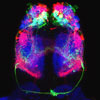 | | | Miyasaka et al. visualise specific neuronal subpopulations that connect the olfactory bulb with higher olfactory centers in the zebrafish brain. | | | | | | |
Advertisement | | 
They're recruiting scientists just like you!
The Naturejobs Career Expo is coming to Boston, Massachusetts on May 20, 2014.
Take advantage of this free opportunity to meet employers, attend workshops and further develop your career.
Don't wait-register today! | | | | | | | | | Latest Articles | View all Articles | | | | | Experimental orthotopic transplantation of a tissue-engineered oesophagus in rats | | | Sebastian Sjöqvist, Philipp Jungebluth, Mei Ling Lim, Johannes C. Haag, Ylva Gustafsson, Greg Lemon, Silvia Baiguera, Miguel Angel Burguillos, Costantino Del Gaudio, Antonio Beltrán Rodríguez, Alexander Sotnichenko, Karolina Kublickiene, Henrik Ullman, Heike Kielstein, Peter Damberg, Alessandra Bianco, Rainer Heuchel, Ying Zhao, Domenico Ribatti, Cristián Ibarra et al. | | | Patients with oesophageal diseases may require surgical removal and replacement of the oesophagus. Here the authors seed mesenchymal stromal cells on a decellularized rat oesophagus and show that this bioengineered tissue construct restores swallowing function after transplantation into rats. | | | 15 April 2014 | doi: 10.1038/ncomms4562 | | | Biological Sciences Medical research |
| Gut microbiome of the Hadza hunter-gatherers OPEN | | | Stephanie L. Schnorr, Marco Candela, Simone Rampelli, Manuela Centanni, Clarissa Consolandi, Giulia Basaglia, Silvia Turroni, Elena Biagi, Clelia Peano, Marco Severgnini, Jessica Fiori, Roberto Gotti, Gianluca De Bellis, Donata Luiselli, Patrizia Brigidi, Audax Mabulla, Frank Marlowe, Amanda G. Henry and Alyssa N. Crittenden | | | Gut microbes influence our health and may contribute to human adaptation to different lifestyles. Here, the authors describe the gut microbiome of a community of hunter-gatherers and identify unique features that could be linked to a foraging lifestyle. | | | 15 April 2014 | doi: 10.1038/ncomms4654 | | | Biological Sciences Evolution Microbiology |
| Mechanisms of charge transfer and redistribution in LaAlO3/SrTiO3 revealed by high-energy optical conductivity | | | T.C. Asmara, A. Annadi, I. Santoso, P.K. Gogoi, A. Kotlov, H.M. Omer, M. Motapothula, M.B.H. Breese, M. Rübhausen, T. Venkatesan, Ariando and A. Rusydi | | | The origin of the two-dimensional electron gas at complex oxide interfaces is often explained by the polar catastrophe model, which involves a charge transfer mechanism. Using optical conductivity analysis, the authors assign and quantify the charge transfer, corroborating the polar catastrophe scenario. | | | 14 April 2014 | doi: 10.1038/ncomms4663 | | | Physical Sciences Condensed matter Nanotechnology |
| Polycomb proteins control proliferation and transformation independently of cell cycle checkpoints by regulating DNA replication OPEN | | | Andrea Piunti, Alessandra Rossi, Aurora Cerutti, Mareike Albert, Sriganesh Jammula, Andrea Scelfo, Laura Cedrone, Giulia Fragola, Linda Olsson, Haruhiko Koseki, Giuseppe Testa, Stefano Casola, Kristian Helin, Fabrizio d'Adda di Fagagna and Diego Pasini | | | Polycomb (PcG) proteins are known to promote cell proliferation by silencing expression of the tumour suppressor Ink4A-Arf. Piunti et al. show that PcG proteins also regulate tumour progression independently of this role, revealing a requirement for PRC1 and PRC2 in replication fork progression. | | | 14 April 2014 | doi: 10.1038/ncomms4649 | | | Biological Sciences Cell biology Molecular biology |
| Timescales for detecting a significant acceleration in sea level rise OPEN | | | Ivan D. Haigh, Thomas Wahl, Eelco J. Rohling, René M. Price, Charitha B. Pattiaratchi, Francisco M. Calafat and Sönke Dangendorf | | | Global sea levels are rising as a result of climate change, but at what rate, and whether this rate is increasing is open to debate. Haigh et al. show that the earliest detection of significant increase in the rate of sea level rise can only be achieved once interannual and multidecadal variability is removed. | | | 14 April 2014 | doi: 10.1038/ncomms4635 | | | Earth Sciences Climate science Oceanography |
| Glycolytic genes are targets of the nuclear receptor Ad4BP/SF-1 | | | Takashi Baba, Hiroyuki Otake, Tetsuya Sato, Kanako Miyabayashi, Yurina Shishido, Chia-Yih Wang, Yuichi Shima, Hiroshi Kimura, Mikako Yagi, Yasuhiro Ishihara, Shinjiro Hino, Hidesato Ogawa, Mitsuyoshi Nakao, Takeshi Yamazaki, Dongchon Kang, Yasuyuki Ohkawa, Mikita Suyama, Bon-Chu Chung and Ken-Ichirou Morohashi | | | The transcription factor NR5A1 has so far mainly been known for regulating the biosynthesis of steroids. Here the authors discover that NR5A1 also has a role in energy metabolism, demonstrating that NR5A1 regulates several key enzymes involved in the breakdown of glucose. | | | 14 April 2014 | doi: 10.1038/ncomms4634 | | | Biological Sciences Cell biology Medical research |
| Joint estimation of phase and phase diffusion for quantum metrology | | | Mihai D. Vidrighin, Gaia Donati, Marco G. Genoni, Xian-Min Jin, W. Steven Kolthammer, M.S. Kim, Animesh Datta, Marco Barbieri and Ian A. Walmsley | | | Phase estimation is an important element of quantum metrology, but the influence of noise cannot always be well characterized. Vidrighin et al. analyse and experimentally demonstrate methods providing simultaneous estimation of a phase shift and the amplitude of phase diffusion at the quantum limit. | | | 14 April 2014 | doi: 10.1038/ncomms4532 | | | Physical Sciences Optical physics |
| Tyrosine-mediated two-dimensional peptide assembly and its role as a bio-inspired catalytic scaffold | | | Hyung-Seok Jang, Jung-Ho Lee, Yong-Sun Park, Young-O Kim, Jimin Park, Tae-Youl Yang, Kyoungsuk Jin, Jaehun Lee, Sunghak Park, Jae Myoung You, Ki-Woong Jeong, Areum Shin, In-Seon Oh, Min-Kyung Kwon, Yong-Il Kim, Hoon-Hwe Cho, Heung Nam Han, Yangmee Kim, Yoon Ho Chang, Seung R. Paik et al. | | | It is well known that the interplay between molecular ordering and interface geometry can determine the morphology of two-dimensional systems. Here, the authors report facet formation in water droplets, driven by peptide assembly, and investigate the structural and sequence motifs that affect this behaviour. | | | 11 April 2014 | doi: 10.1038/ncomms4665 | | Chemical Sciences Biochemistry Biotechnology
Nanotechnology |
| Trapping of drops by wetting defects OPEN | | | Dieter 't Mannetje, Somnath Ghosh, Rudy Lagraauw, Simon Otten, Arjen Pit, Christian Berendsen, Jos Zeegers, Dirk van den Ende and Frieder Mugele | | | Precise control of moving droplets on surface defects is essential for microfluidic applications. Here the authors formalize a generic rule to describe droplet trapping using two dimensionless parameters and show how electrically tunable defects guide sliding drops in microfluidic channels. | | | 11 April 2014 | doi: 10.1038/ncomms4559 | | Physical Sciences Fluids and plasma physics
Nanotechnology |
| Novel skin phenotypes revealed by a genome-wide mouse reverse genetic screen OPEN | | | Kifayathullah Liakath-Ali, Valerie E. Vancollie, Emma Heath, Damian P. Smedley, Jeanne Estabel, David Sunter, Tia DiTommaso, Jacqueline K. White, Ramiro Ramirez-Solis, Ian Smyth, Karen P. Steel and Fiona M. Watt | | | Large-scale efforts are put into the generation of knockout mutant mice for many individual genes. Here, the authors systematically screen skin from 538 mutant mice and identify 50 mutants with epidermal phenotypes, of which 9 are also associated with human skin defects. | | | 11 April 2014 | doi: 10.1038/ncomms4540 | | | Biological Sciences Developmental biology Genetics |
| Protein interaction network of alternatively spliced isoforms from brain links genetic risk factors for autism OPEN | | | Roser Corominas, Xinping Yang, Guan Ning Lin, Shuli Kang, Yun Shen, Lila Ghamsari, Martin Broly, Maria Rodriguez, Stanley Tam, Shelly A. Trigg, Changyu Fan, Song Yi, Murat Tasan, Irma Lemmens, Xingyan Kuang, Nan Zhao, Dheeraj Malhotra, Jacob J. Michaelson, Vladimir Vacic, Michael A. Calderwood et al. | | | Autism spectrum disorder (ASD) is a complex genetic trait that encompasses a range of neurodevelopmental disorders. Here, the authors clone brain-expressed alternatively-spliced isoforms of ASD risk factors and construct a network of protein interactions that provides further insight into the disease aetiology. | | | 11 April 2014 | doi: 10.1038/ncomms4650 | | | Biological Sciences Genetics Neuroscience |
| Lin28a regulates neuronal differentiation and controls miR-9 production OPEN | | | Jakub S. Nowak, Nila Roy Choudhury, Flavia de Lima Alves, Juri Rappsilber and Gracjan Michlewski | | | microRNAs regulate gene expression and control cell fate and differentiation processes. In this work, Nowak et al. reveal that brain-specific miR-9 is under post-transcriptional control and that the pre-miR-9 binding protein Lin28a decreases the levels of mature miR-9 during retinoic acid-mediated neuronal differentiation. | | | 11 April 2014 | doi: 10.1038/ncomms4687 | | | Biological Sciences Cell biology Neuroscience |
| Nucleic acid sensing by T cells initiates Th2 cell differentiation | | | Takayuki Imanishi, Chitose Ishihara, Mohamed El Sherif Gadelhaq Badr, Akiko Hashimoto-Tane, Yayoi Kimura, Taro Kawai, Osamu Takeuchi, Ken J. Ishii, Shun'ichiro Taniguchi, Tetsuo Noda, Hisashi Hirano, Frank Brombacher, Glen N. Barber, Shizuo Akira and Takashi Saito | | | Nucleic acids modulate T cell responses; however, the physiological significance of this property remains unclear. Here, the authors show that self-DNA complexes with antimicrobial peptides or histones, which mediates T cell costimulation to induce Th2 cell differentiation. | | | 10 April 2014 | doi: 10.1038/ncomms4566 | | | Biological Sciences Immunology |
| Correlated optical and isotopic nanoscopy OPEN | | | Sinem K. Saka, Angela Vogts, Katharina Kröhnert, François Hillion, Silvio O. Rizzoli and Johannes T. Wessels | | | Secondary ion mass spectrometry is effective for imaging cellular turnover, but it cannot identify subcellular structures such as organelles. Here the authors show a method for correlating this technique with high-resolution fluorescence microscopy, enabling the measurement of turnover in cellular compartments. | | | 10 April 2014 | doi: 10.1038/ncomms4664 | | Biological Sciences Cell biology Immunology
Optical physics |
| Generation of colonic IgA-secreting cells in the caecal patch | | | Kazunori Masahata, Eiji Umemoto, Hisako Kayama, Manato Kotani, Shota Nakamura, Takashi Kurakawa, Junichi Kikuta, Kazuyoshi Gotoh, Daisuke Motooka, Shintaro Sato, Tomonori Higuchi, Yoshihiro Baba, Tomohiro Kurosaki, Makoto Kinoshita, Yosuke Shimada, Taishi Kimura, Ryu Okumura, Akira Takeda, Masaru Tajima, Osamu Yoshie et al. | | | Gut-associated Peyer's patches are lymphoid tissues that generate IgA-secreting cells, however less is known about related caecal patches. Here, Masahata et al. show that caecal patches produce IgA-positive B cells that migrate to the intestines to maintain faecal microbiota homeostasis. | | | 10 April 2014 | doi: 10.1038/ncomms4704 | | | Biological Sciences Immunology |
| Universal dispersion of surface plasmons in flat nanostructures OPEN | | | Franz-Philipp Schmidt, Harald Ditlbacher, Ulrich Hohenester, Andreas Hohenau, Ferdinand Hofer and Joachim R. Krenn | | | The dimensionality of nanostructures is important in determining their properties. Using electron spectroscopy, Schmidt et al. systematically study the plasmonic modes in silver nanodisks as they vary their dimensionality, and find that they can be scaled to the film and edge modes of extended silver films. | | | 10 April 2014 | doi: 10.1038/ncomms4604 | | | Physical Sciences Nanotechnology Optical physics |
| Impact of genomic polymorphisms on the repertoire of human MHC class I-associated peptides OPEN | | | Diana Paola Granados, Dev Sriranganadane, Tariq Daouda, Antoine Zieger, Céline M. Laumont, Olivier Caron-Lizotte, Geneviève Boucher, Marie-Pierre Hardy, Patrick Gendron, Caroline Côté, Sébastien Lemieux, Pierre Thibault and Claude Perreault | | | Mass spectrometry (MS) has furthered our understanding of MHC class I-associated peptides (MIPs), but the technique is inadequate for studying MIP-associated polymorphisms. Here, the authors combine high-throughput MS with exome and transcriptome sequencing to identify polymorphic MIPs from two female siblings. | | | 09 April 2014 | doi: 10.1038/ncomms4600 | | | Biological Sciences Genetics Immunology |
| Processed pseudogenes acquired somatically during cancer development OPEN | | | Susanna L. Cooke, Adam Shlien, John Marshall, Christodoulos P. Pipinikas, Inigo Martincorena, Jose M.C. Tubio, Yilong Li, Andrew Menzies, Laura Mudie, Manasa Ramakrishna, Lucy Yates, Helen Davies, Niccolo Bolli, Graham R. Bignell, Patrick S. Tarpey, Sam Behjati, Serena Nik-Zainal, Elli Papaemmanuil, Vitor H. Teixeira, Keiran Raine et al. | | | Germline pseudogenes have an important role in human evolution. Here, the authors analyse sequencing data from 660 cancer samples and find evidence for the formation of somatically acquired pseudogenes, a new class of mutation, which may contribute to cancer development. | | | 09 April 2014 | doi: 10.1038/ncomms4644 | | | Biological Sciences Cancer Genetics |
| | | | | | | | | | Latest Corrigendum | | | | | | | | | |
Advertisement | | | | | | | | | | | | | Natureevents is a fully searchable, multi-disciplinary database designed to maximise exposure for events organisers. The contents of the Natureevents Directory are now live. The digital version is available here.
Find the latest scientific conferences, courses, meetings and symposia on natureevents.com. For event advertising opportunities across the Nature Publishing Group portfolio please contact natureevents@nature.com | | | | | | | | You have been sent this Table of Contents Alert because you have opted in to receive it. You can change or discontinue your e-mail alerts at any time, by modifying your preferences on your nature.com account at: www.nature.com/myaccount
(You will need to log in to be recognised as a nature.com registrant)
For further technical assistance, please contact our registration department
For other enquiries, please contact our customer feedback department
Nature Publishing Group | 75 Varick Street, 9th Floor | New York | NY 10013-1917 | USA
Nature Publishing Group's worldwide offices:
London - Paris - Munich - New Delhi - Tokyo - Melbourne
San Diego - San Francisco - Washington - New York - Boston
Macmillan Publishers Limited is a company incorporated in England and Wales under company number 785998 and whose registered office is located at Brunel Road, Houndmills, Basingstoke, Hampshire RG21 6XS.
© 2013 Nature Publishing Group, a division of Macmillan Publishers Limited. All Rights Reserved. |  | | | |








No comments:
Post a Comment