| | A dual origin for blood vessels
Contrary to previous assumptions, it seems the cells that line blood vessels are derived from more than one source. In addition to their known developmental path, they can arise from progenitors of embryonic blood cells.
M. Luisa Iruela-Arispe | A natural variant and engineered mutation in a GPCR promote DEET resistance in C. elegans
DEET interferes selectively with chemotaxis of Caenorhabditis elegans; mutations in the str-217 gene or silencing of the pair of chemosensory neurons that express it makes worms DEET-resistant.
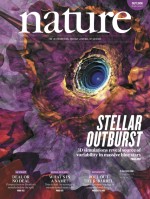
Emily J. Dennis, May Dobosiewicz, Xin Jin et al. | An evolving jet from a strongly magnetized accreting X-ray pulsar
Observations of a jet from a strongly magnetized neutron star reveal that strong magnetic fields do not prevent jet formation and suggest that stellar properties influence jet power.
J. van den Eijnden, N. Degenaar, T. D. Russell et al. | Erythro-myeloid progenitors contribute endothelial cells to blood vessels
New blood vessel endothelial cells arise from differentiation of erythro-myeloid progenitor cells to complement the proliferation of pre-existing endothelial cells.
Alice Plein, Alessandro Fantin, Laura Denti et al. | Blood flow forces liver growth
Increases in biomechanical forces in the liver’s blood vessels have now been shown to activate two mechanosensitive proteins. The proteins trigger blood-vessel cells to deploy regenerative factors that drive liver growth.
Sina Y. Rabbany, Shahin Rafii | Plant functional trait change across a warming tundra biome
Analyses of the relationships between temperature, moisture and seven key plant functional traits across the tundra and over time show that community height increased with warming across all sites, whereas other traits lagged behind predicted rates of change.
Anne D. Bjorkman, Isla H. Myers-Smith, Sarah C. Elmendorf et al. | Mechanosensing by β1 integrin induces angiocrine signals for liver growth and survival
In mouse and human liver models, blood vessel perfusion and mechanical stretching release angiocrine signals from endothelial cells that lead to hepatocyte survival and liver growth.
Linda Lorenz, Jennifer Axnick, Tobias Buschmann et al. | Common genetic variants contribute to risk of rare severe neurodevelopmental disorders
A genome-wide association study of approximately 7,000 patients with neurodevelopmental disorders demonstrates that overall risk and clinical presentation in putative monogenic disorders are also influenced by common genetic variants present in the general population.
Mari E. K. Niemi, Hilary C. Martin, Daniel L. Rice et al. | Subcycle observation of lightwave-driven Dirac currents in a topological surface band
Time- and angle-resolved photoemission spectroscopy reveals how Dirac fermions in the band structure of the topological surface state of Bi2Te3 are accelerated by the carrier wave of a terahertz-frequency light pulse.
J. Reimann, S. Schlauderer, C. P. Schmid et al. | Principles of nucleosome organization revealed by single-cell micrococcal nuclease sequencing
Single-cell micrococcal nuclease sequencing simultaneously measures chromatin accessibility and genome-wide nucleosome positioning in single cells to reveal principles of nucleosome organization.
Binbin Lai, Weiwu Gao, Kairong Cui et al. | From the archive
What Nature was saying 50 and 100 years ago.
| Architecture of the TRPM2 channel and its activation mechanism by ADP-ribose and calcium
Structures of the transient receptor potential melastatin 2 channel in the apo resting (closed) state and in the ADP-ribose/Ca2+-bound active (open) state are determined by cryo-electron microscopy.
Yihe Huang, Paige A. Winkler, Weinan Sun et al. | The interaction landscape between transcription factors and the nucleosome
A method for systematically exploring interactions between the nucleosome and transcription factors identifies five major interaction patterns.
Fangjie Zhu, Lucas Farnung, Eevi Kaasinen et al. | Discovery of a periosteal stem cell mediating intramembranous bone formation
A periosteal stem cell specialized in intramembranous bone formation has been identified and was found to be essential for normal bone development and fracture healing.
Shawon Debnath, Alisha R. Yallowitz, Jason McCormick et al. | Integrated lithium niobate electro-optic modulators operating at CMOS-compatible voltages
Chip-scale lithium niobate electro-optic modulators that rapidly convert electrical to optical signals and use CMOS-compatible voltages could prove useful in optical communication networks, microwave photonic systems and photonic computation.
Cheng Wang, Mian Zhang, Xi Chen et al. | | | | Brief Communications Arising | | | | | Population dynamics of normal human blood inferred from somatic mutations
Analysis of blood from a healthy human show that haematopoietic stem cells increase rapidly in numbers through early life, reaching a stable plateau in adulthood, and contribute to myeloid and B lymphocyte populations throughout life.
Henry Lee-Six, Nina Friesgaard Øbro, Mairi S. Shepherd et al. | | Cryo-EM structure of the active, Gs-protein complexed, human CGRP receptor
The structure of a complex containing calcitonin gene-related peptide, the human calcitonin gene-related peptide receptor and the Gs heterotrimer, determined using Volta phase-plate cryo-electron microscopy, provides structural insight into the regulation of G-protein-coupled receptors by receptor activity modifying protein 1.
Yi-Lynn Liang, Maryam Khoshouei, Giuseppe Deganutti et al. | | | A topological source of quantum light
Topologically protected edge states realized in a square array of ring resonators are used to demonstrate a robust source of heralded single photons produced by spontaneous four-wave mixing.
Sunil Mittal, Elizabeth A. Goldschmidt, Mohammad Hafezi | | | | | |





No comments:
Post a Comment