Access articles and reviews from ACS Chemical Biologyfeaturing leading scientists that are studying, optimizing, and manipulating the CRISPR-Cas platform for gene editing and beyond.
Featuring JoAnne Stubbe, PhD, of Massachusetts Institute of Technology, this half-day event convenes chemists and biologists to enhance interactions among local-area laboratories and showcase cutting edge research. Short Talks and Posters! Abstract deadline: March 23rd. Free for Members. Register.
Advertisement
A new open access, multi- and interdisciplinary journal dedicated to publishing the highest quality papers on systems biology, the journal is now open for submissions.
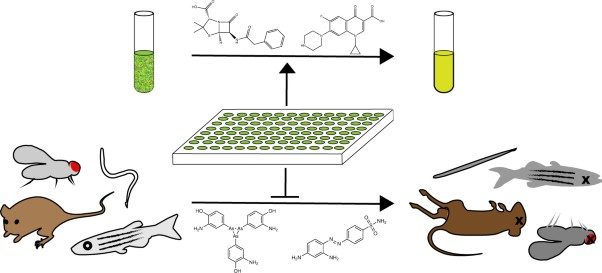
Targeting the host during antibiotic discovery efforts is a viable strategy, and the approach has benefited from phenotypic screening of model organisms such as worms, zebrafish, and mice.
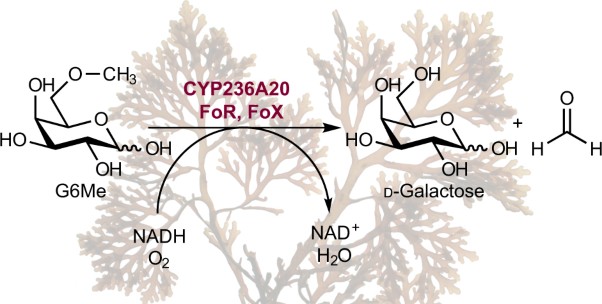
The discovery of cytochrome P450 monooxygenases that catalyze oxidative demethylation of 6-O-methyl-D-galactose reveals a new activity of cytochrome P450 enzymes and their role in polysaccharide biomass degradation in marine bacteria.
The Naturejobs podcast features one-on-one Q&As, panel discussions and other exclusive content to help scientists with their careers. Hosted on the Naturejobs blog, the podcast is also available on iTunes and Soundcloud.
The structure of a Stig cyclase, HpiC1, reveals how it catalyzes Cope rearrangement and 6-exo-trig cyclization, including how it controls the position of electrophilic aromatic substation that distinguishes hapalindole from fischerindole alkaloids.
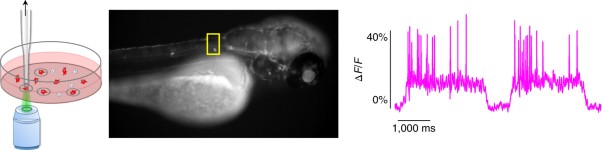
Directed evolution of opsins via robotic high-content screening finds a fluorescent reporter of voltage that is simultaneously optimized for brightness, localization and voltage sensitivity and is applicable in three model systems.
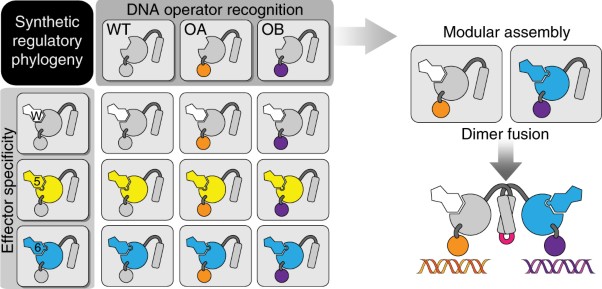
Directed evolution of Trp repressor (TrpR) variants that are responsive to halogenated tryptophan analogs and recognize new operator sites serve as useful components for constructing complex gene expression networks.
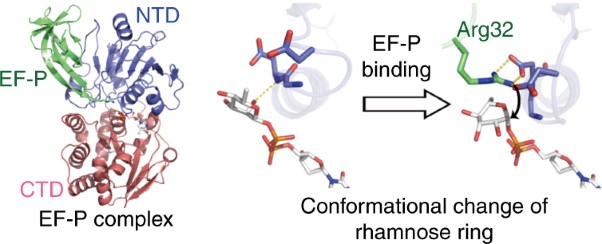
The crystal structure of EarP, an inverting glycosyltransferase that generates rhamnosyl-arginine modifications, suggests that the enzyme uses an SN2 reaction mechanism that may involve perturbation of the donor sugar nucleotide conformation.
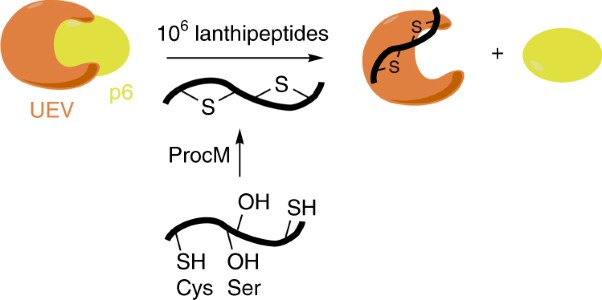
The substrate-tolerant lanthipeptide synthetase ProcM enables the construction of a plasmid-encoded library of bicyclic lanthipeptides, from which an inhibitor of the p6–UEV protein–protein interaction is identified by a reverse two-hybrid screen.
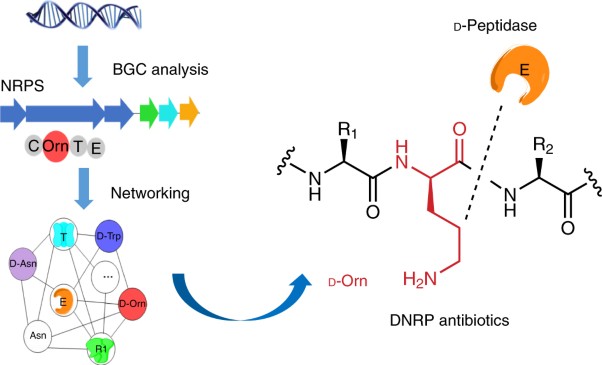
Networking-associated genome mining on bacterial genomes followed by chemical and enzymatic analysis identified a mechanism of resistance toward nonribosomal peptide antibiotics based on hydrolytic cleavage by d-stereospecific peptidases.
A nonequilibrium thermodynamic model can explain how molecular chaperones such as GroEL can use the energy from ATP hydrolysis to maintain substrate proteins in an active state, even under conditions that favor the substrate's inactive unfolded state.
A photoswitchable diacylglycerol enabled a screen that found critical TRPC3 lipid-sensing residues and identified a lateral fenestration in the pore domain that allows lipids to protrude into the permeation pathway to control channel gating.
Selective TRIM24 degradation is achieved by co-opting the VHL E3 ubiquitin ligase machinery. TRIM24 degradation outperforms bromodomain inhibition, with an enhanced antiproliferative effect in acute leukemia, a novel context of TRIM24 dependency.
Advertisement
Searching for a new career? At Nature Research we frequently recruit talented individuals to join our editorial and publishing teams. If you have a PhD and a passion for science this may be the perfect career for you. Visit our research editorial and publishing careers website to discover more about what we do.
Advertisement
Adolescence Collection
Exploring the science of adolescence and its far-reaching implications for societal challenges
Natureevents is a fully searchable, multi-disciplinary database designed to maximise exposure for events organisers. The contents of the Natureevents Directory are now live. The digital version is available here. Find the latest scientific conferences, courses, meetings and symposia on natureevents.com. For event advertising opportunities across the Nature Publishing Group portfolio please contact natureevents@nature.com
You have been sent this Table of Contents Alert because you have opted in to receive it. You can change or discontinue your e-mail alerts at any time, by modifying your preferences on your nature.com account at: www.nature.com/myaccount (You will need to log in to be recognised as a nature.com registrant)
Springer Nature | One New York Plaza, Suite 4500 | New York | NY 10004-1562 | USA
Springer Nature's worldwide offices: London - Paris - Munich - New Delhi - Tokyo - Melbourne San Diego - San Francisco - Washington - New York - Boston
Macmillan Publishers Limited is a company incorporated in England and Wales under company number 785998 and whose registered office is located at The Campus, 4 Crinan Street, London, N1 9XW.















No comments:
Post a Comment