Tumor drug shows promise for Tasmanian devils, pets and maybe humans A new plant-derived drug, EBC-46, was associated with regression or palliation in cancerous tumors in four Tasmanian devils, which have suffered massive losses to a contagious cancer. Veterinarian Jack Ayerbe, a director with the company that developed the drug, says he's used it successfully to treat some dogs and cats in his practice. Veterinarian Stephen Pyecroft, who helped develop and test the drug, says it may help treat captive devils and improve survival of their young, but it won't be a feasible treatment for wild animals. Human trials are planned as well.  The Sydney Morning Herald (Australia) (7/1) The Sydney Morning Herald (Australia) (7/1) Scientists work overtime to find the animal origins of MERS The source of Middle Eastern Respiratory Syndrome, the reason it emerged when it did and how serious the threat will become are some of the questions an international team of scientists is trying to answer amid fears MERS could become the next pandemic. It's thought that bats harbor the coronavirus and transmit it to another species that then exposes humans. Gaining an understanding of the animal-human links in MERS may offer insights into how to prevent future outbreaks of zoonotic disease, experts said. The New York Times (tiered subscription model) (7/1) Fla. chicken tests positive for EEE Florida's Hernando County Mosquito Control reported that a chicken tested positive for Eastern equine encephalitis virus, a mosquito-transmitted disease that is potentially fatal among humans and horses. Officials are reminding residents about the importance of preventing bites and are urging horse owners to keep vaccinations current. Symptoms of the virus in humans begin within less than a week to 10 days after a bite and include high fever, chills and vomiting. Tampa Bay Times (St. Petersburg, Fla.) (7/1) Other News  | New Technology Helps Doctors Link a Patient's Location to Illness and Treatment
Geomedicine is a burgeoning field which uses geographic information system (GIS) technology to correlate environmental conditions with health risks.
The Washington Post | Christine MacDonald |
 | Veterinarian: No excuses -- hot cars are dangerous to pets In what he calls an "eye-opening experience," veterinarian Ernie Ward spends 30 minutes on a summer day in a parked car with all four windows cracked to illustrate what pets go through when they're left in hot vehicles. "Everything in my body is saying get out, get out, get out," Dr. Ward said 25 minutes into the experience. "This kills, and it's a lousy way to die." BuzzFeed (7/1) Other News 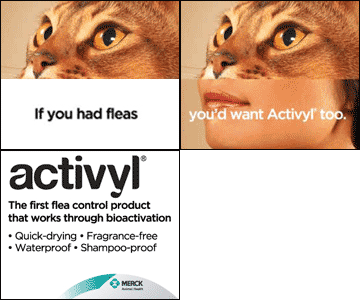 | If you had fleas—you'd want Activyl® too! Dogs, cats and their owners all want something that's really effective at getting rid of fleas! Now you can offer them Activyl®—a highly effective innovation in flea treatment that works through bioactivation-a mode of action that uses enzymes inside the flea to activate Activyl®'s full flea-killing power. Learn more here! | | Leaders come in 5 flavors, researchers say There are five leadership styles upon which executives depend, according to a recent study. Some bosses have a gruff, "tough love" approach; others are nurturing mentors, hard-working single-minded leaders or "country clubbers" who get things done by networking and charming those around them. Whatever your natural style, you'll achieve more if you're able to borrow from other modes of leadership as the situation demands, writes Andrea Kay. USA Today/Gannett News Service (6/29)  | Seven Tips for Better Facebook Pages Facebook is easy to use and can be a valuable component to your online marketing strategy. Unfortunately, most small businesses don't do a good job of actually generating buzz or, better yet, sales with their page.
Read our "Seven Tips for Better Facebook Pages". | | AVMA Spanish-language resources The AVMA has many items available to view, print and download for free in English and Spanish. Communicate with your Spanish-speaking clients about properly selecting a pet; protecting pets from common diseases; keeping pets healthy; pet loss and euthanasia; careers in veterinary medicine; and preparing their family for a disaster. View AVMA's Spanish-language products. |  | If at first you don't succeed, try to hide your astonishment." -- Harry Banks, Scottish soldier | | | The news summaries appearing in Animal Health SmartBrief are based on original information from news organizations and are produced by SmartBrief, Inc., an independent e-mail newsletter publisher. The AVMA is not responsible for the content of sites that are external to the AVMA. Linking to a website does not constitute an endorsement by the AVMA of the site or the information presented on the site. Questions and comments should be directed to SmartBrief at avma@smartbrief.com. | Please contact one of our specialists for advertising opportunities, editorial inquiries, job placements, or any other questions.
| Mailing Address:
SmartBrief, Inc.®, 555 11th ST NW, Suite 600, Washington, DC 20004 | | |











No comments:
Post a Comment