Wednesday, July 30, 2025

Inbox Astronomy: NASA's Webb Traces Details of Complex Planetary Nebula

INBOX ASTRONOMY

NASA's Webb Traces Details of Complex Planetary Nebula

Release date: Wednesday, July 30, 2025 10:00:00 AM Eastern Daylight Time

NASA's Webb Traces Details of Complex Planetary Nebula


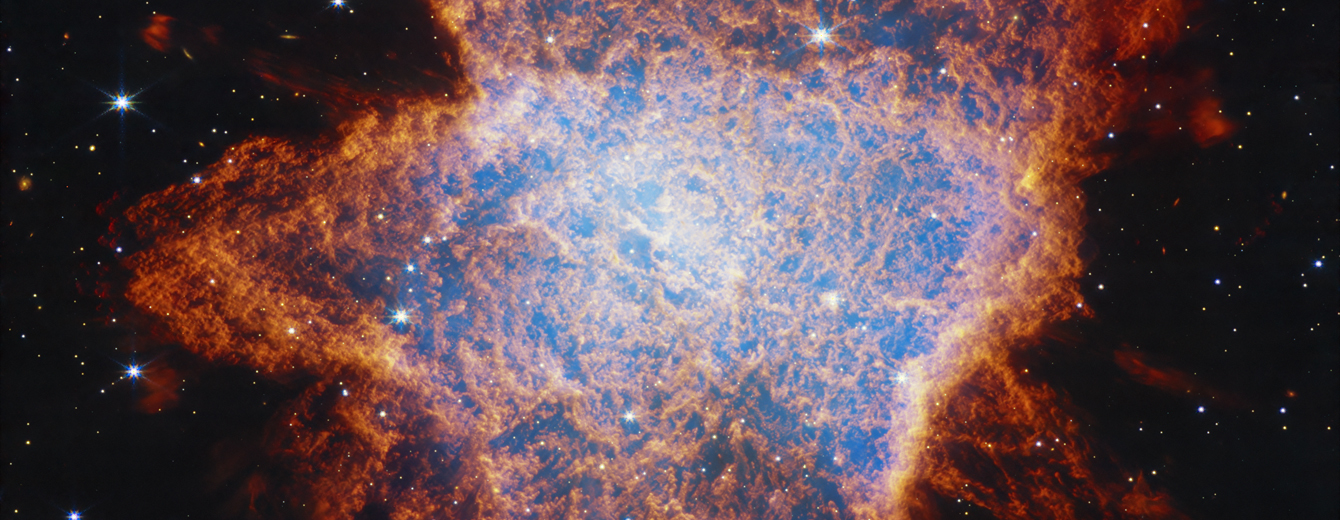
More than one star contributes to the irregular shape of NGC 6072.

The lifecycle of stars is one of the most well-studied areas of astronomical study, but is still shrouded in mystery. Stars are essentially the cosmic engines that shape the universe. They populate the universe with elements, some key to life as we know it. Planetary nebulas are spectacular showings of a star, 1 to 8 times the mass of our Sun, as it is dying, casting off a glowing shell of gas and dust. Eventually, our own Sun will go through this phase. However, it’s astronomers’ best guess on specifically what that last hurrah will look like – not that we’ll be around to see. Studying planetary nebulas outside our solar system may provide insights into that, however, more powerful telescopes and detailed studies have shown the process isn’t as straightforward as once thought. Complicated dynamics in systems, including interacting stars, create messy scenes, as seen in NASA’s James Webb Space Telescope’s newest look at a planetary nebula, NGC 6072.


Find additional articles, images, and videos at WebbTelescope.org


  Please do not reply to this message.
You are receiving this email because you are subscribed to the Inbox Astronomy mailing list.
 
Produced by the Space Telescope Science Institute's Office of Public Outreach
 

Thursday, July 24, 2025

Inbox Astronomy: NASA's Hubble, Chandra Spot Rare Type of Black Hole Eating a Star

INBOX ASTRONOMY

NASA's Hubble, Chandra Spot Rare Type of Black Hole Eating a Star

Release date: Thursday, July 24, 2025 10:00:00 AM Eastern Daylight Time

NASA's Hubble, Chandra Spot Rare Type of Black Hole Eating a Star


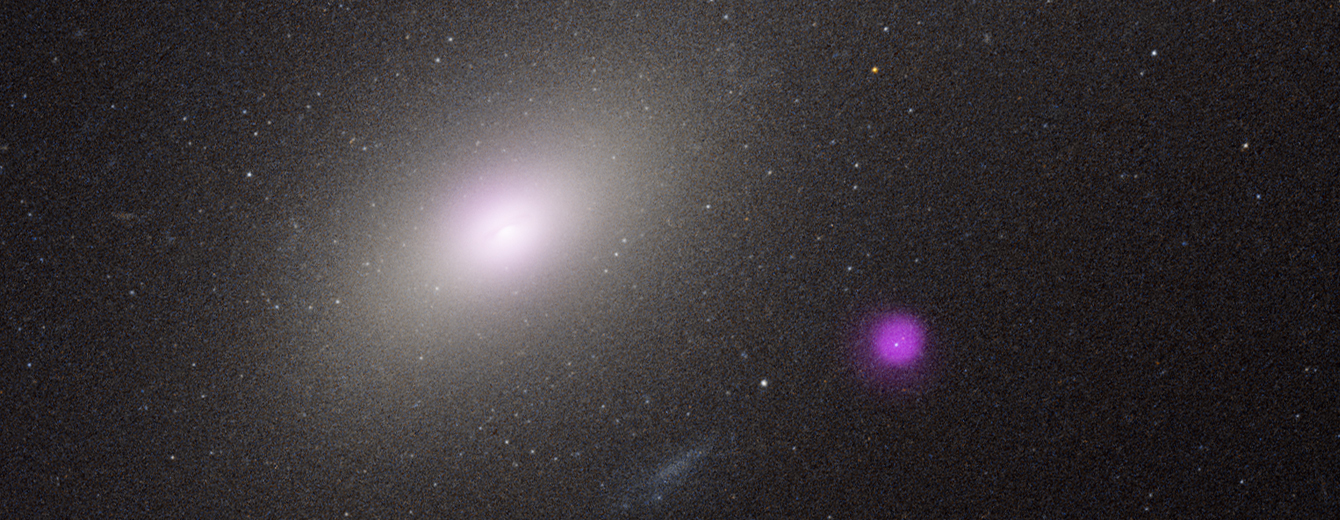
Hubble Looks at an Intermediate Black Hole Roaming Inside a Galaxy

Black holes, trap doors in space, come in a vast range of sizes. Some are a few times the mass of our Sun. The largest are billions of times the mass of our Sun. There is a curious gap in the range of black hole sizes. A rare class called “intermediate mass” black holes (IMBHs) weigh between a few hundred to a few 100,000 times the mass of our Sun. Unlike their much bigger cousins, monster black holes in the core of galaxies, they’re harder to find. They have to be caught in the act of foraging. When they occasionally devour a hapless bypassing star — in what astronomers call a tidal disruption event  — they pour out a gusher of radiation. This has been captured both by the Hubble and Chandra space telescopes. A recent black hole fishing expedition found an IMBH nestled on the outskirts of a huge elliptical galaxy, NGC 6099, located 450 million light-years away. IMBHs represent a crucial missing link in black hole evolution between stellar mass and supermassive black holes.


Find additional resources at www.stsci.edu


  Please do not reply to this message.
You are receiving this email because you are subscribed to the Inbox Astronomy mailing list.
 
Produced by the Space Telescope Science Institute's Office of Public Outreach
 

Monday, July 21, 2025

Halve Your Lysing Matrix Tube Cost - RotaPrep is Always in Stock

View this email in your browser
Dear Colleagues, 

Summer is the perfect time to optimize your lab budget and boost sample preparation productivity. RotaPrep offers you the exact same high-quality lysing matrix tubes and bulk beads for bead beating. you've relied on—at half the cost of leading brands.

✅ USA Made High Quality Lysing Matrix Products
✅ Always in Stock: No more waiting on backorders 
✅ Proven Performance: Trusted by leading academic and biotech labs
✅ Cost Effective: Save 50% or more compared with traditional sources
✅  American Scientists' Owned Company

Request Your Free Sample → by emailing Rebecca@Rotaprep.com.

Order Now & Get 20% Off 


Visit Rotaprep.com to discover why researchers around the world are switching to RotaPrep Lysing Matrix. Our beads deliver consistent results across all popular bead mill homogenizers, including FastPrep®, Bead Ruptor™, and Precellys®.


Best regards,


Rebecca Claire
Rebecca@Rotaprep.com 
Key Account Manager 
The RotaPrep Team
https://www.rotaprep.com


P.S. Share the promo with your colleagues and let them know RotaPrep has their back in 2025! 🎉 

Website
Copyright © 2025 Rotaprep Inc., All rights reserved.

Our mailing address is:
Rotaprep Inc.
2913 El Camino Real # 242
Tustin, CA 92782-8909

Add us to your address book


Want to change how you receive these emails?
You can update your preferences or unsubscribe from this list.

Thursday, July 10, 2025

Inbox Astronomy: NASA's Webb Scratches Beyond Surface of Cat’s Paw for 3rd Anniversary

INBOX ASTRONOMY

NASA's Webb Scratches Beyond Surface of Cat’s Paw for 3rd Anniversary

Release date: Thursday, July 10, 2025 10:00:00 AM Eastern Daylight Time

NASA's Webb Scratches Beyond Surface of Cat’s Paw for 3rd Anniversary


What lies within a toe bean? According to NASA’s James Webb Space Telescope, mini toe beans composed of gas, dust, and stars.

Since the start of its science operations in July 2022, the James Webb Space Telescope has amazed scientists and the public alike with its ability to peer farther into the cosmos than ever before. With each infrared-light observation, the telescope continues to reveal aspects of the universe previously unknown to us.

To mark its third year of highly productive science, astronomers used Webb to scratch beyond the surface of the Cat’s Paw Nebula (NGC 6334), a massive, local star-forming region. This near-infrared view, which shows a portion of a singular “toe bean,” reveals a subset of mini toe bean-reminiscent structures composed of gas, dust, and young stars.


Find additional articles, images, and videos at WebbTelescope.org


  Please do not reply to this message.
You are receiving this email because you are subscribed to the Inbox Astronomy mailing list.
 
Produced by the Space Telescope Science Institute's Office of Public Outreach